

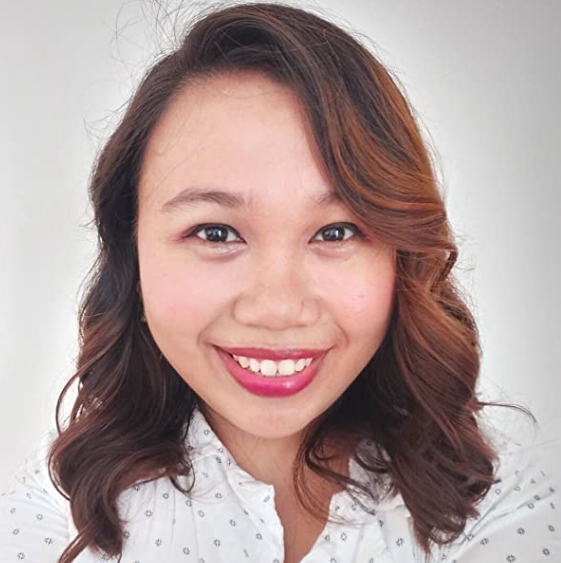
Today we have Marie with us! Welcome, Marie!
Can you tell us a bit about yourself and the different cultures you are part of?
Hello, My name is Marie and I am originally from the Philippines, born to Filipino parents. We moved to South Korea, Egypt, and the Philippines throughout my formative years. When I was a little older, my family moved to Oman and Canada, and I got the chance to visit them when I was in university.
What is one memory from your time in one of your non-passport countries that you would like to share?
I remember moving from Egypt to South Korea for university, and I underestimated the saying, “Old habits die hard.” For some context: living in Egypt all throughout my middle school and high school years, I picked up a local habit or two.
My hometown in Egypt was a small town that generally allowed you to walk along the streets, but there were a few big roads where cars acted like they were auditioning for the Fast and Furious movies. Being a small town, there were no stoplights or crosswalks. So we foreigners learned from the locals that when crossing the road you must run like crazy and hope you make it to the other side.
As someone who lived there for six years, I could say it became second nature to me. So, when I moved to the bustling metropolis of Seoul, South Korea, I would walk around the city like I was back in Cairo, minding my own business, as I explored the city. I only failed to take into account two facts: a) that I had forgotten crosswalks and stoplights existed, and b) that I didn’t know how they worked at that point.
I remember one of my earlier college days when I found myself crossing the street all by myself, wondering why people weren’t crossing. Let’s just say that the second I realized why, I ran like no tomorrow toward the other side of the road. I had to learn how to practice using crosswalks and to keep an eye out for stoplights from that point on.
What is one thing you have learned about being a TCK?
One thing I learned about being a TCK is that we carry a lot more grief than we would care to admit. We try to pack so much into one suitcase: our memories of goodbyes, changing cultures, changing addresses, always having to adjust, and sometimes having to act a certain way to please the authority around us – all while trying to figure out who we are and our place in this world. Without unpacking and processing what we have gone through, we will end up carrying that luggage around with us wherever we go.
I learned that having the skills, tools, and resources to make sense of our upbringing, with a lot of support from people who love and care about us, makes a world of difference in the healing process and in “unpacking” our unseen baggage.
How has being a TCK helped you when interacting with people?
Being a TCK is like being a chameleon: we are able to blend into whatever settings we are placed in. In the same way, when we are interacting with people, no matter where they are from in the world, we are able to adapt and strike up a conversation.
I didn’t realize this was a skill until later in life when I moved back to my passport country and realized some people can be shy or even scared to interact with a foreigner. But for us, that comes with such ease.
What characteristic of God have you learned most about in your life as a TCK?
One characteristic of God that I’ve learned through my journey is that God is always present in my struggles. Did you know that Jesus was a TCK? Although He was born in Bethlehem, He fled to Egypt as a young child. The thought of Jesus having to readjust to living in His “hometown” made me feel not so alone.
Many other Bible characters were also displaced during their lifetime due to different circumstances. Knowing that they went through adjusting and having to live a new life made me feel like I was not alone on my TCK journey.
Being a TCK is tough. Feeling like I’m on the outskirts of every place I go to, even my own passport country, makes me feel like I don’t belong anywhere. Yet, through the ups and downs of my life, God shows me that I belong right in His arms.
Tell us a little about your journey to becoming an author.
In all honesty, I didn’t dream of being an author in my early stages of life, especially since one of my elementary school teachers told me I wasn’t a very good writer. I just continued to do school until my high school teacher noticed my potential and encouraged me to continue writing.
Before I knew it, I found myself writing for local magazines in my hometown in Egypt, writing school articles, or writing a novel for fun with friends in high school. When it came time to put my resume together in college, I found that a lot of my volunteer work/hobbies revolved around writing. So, around that time I decided I wanted to one day write a book. I didn’t have any idea what it would be about; all I knew was that I wanted to write one.
It took a while to figure out what kind of writing I enjoyed, to be honest. My major in college was comparative literature and culture (with a specialty in creative writing), so I guess I subconsciously was on the right track majoring in something regarding culture.
Throughout my college career, I took many different writing classes, and that helped me figure out what kind of writing I loved. I realized I didn’t enjoy creating worlds like fantasy or sci-fi; I found out that I just liked telling stories. Stories that inspire, stories that bring hope and encouragement to those who read them.
When the pandemic came, I came face to face with a lot of my fears, including why I never actually took the steps toward writing my book. I recognized that a lot of the fears stemmed from people rejecting my story, like my teacher from my elementary school days. I went through a lot of processing with my therapist and close friends as I worked through those fears. Eventually, I got to a place where I knew I had to write to encourage other people.
I was reminded of what my high school teacher told me, “Write what you know.” That inspired me to write about my own TCK upbringing.
For the longest time, I felt so alone being a TCK, especially during the pandemic. We had just moved back to the Philippines, and I felt misunderstood and different from the environment I was in.
I wanted to write about my upbringing, moving from one country to the next, and about all the struggles I faced from making friends, adjusting, having limited vocabulary to express how I felt, and dealing with the constant goodbyes. I didn’t want others to feel alone in their TCK upbringing, as I had, so I knew I had to write my book.
When my book came out, I was so surprised to see the positive response to it. People from different chapters of my life reached out to tell me that they felt seen and heard for the first time in their lives, knowing that there was someone who felt similarly to them in what they were going through. This eventually led to me starting my podcast and giving people the space to share their stories. I am so grateful for the people who continue to support what I do.
In the process, the biggest thing I learned about myself is that my voice does matter. For the longest time, I didn’t think I had anything to say because I wasn’t eloquent enough, articulate enough, or I didn’t write well enough. Regardless, I still had a story to tell, and that story may very well be a story that encourages someone to believe that there is hope and that they are not alone.
What is one thing you would like to tell your fellow TCKs?
No matter what you are going through, take heart in the fact that God is writing your story. That He sees you, knows you, and knows what you are going through. The TCK life can feel so isolating at times, but know that it will get better and that God has a plan.
There were so many moments when I felt like He had abandoned me and left me by the wayside. In those moments, I remember Bible characters like Joseph who was wrongfully convicted and thrown in prison for years. Yet, God never took His eyes off him. I can imagine how hopeless some of those moments must have felt. I’ve even wrestled with thoughts like, “Have You forgotten me?” when I couldn’t find friends or adjust to my environment.
Those moments were so hard, but I can say now that every step of that journey led me to where I am now. Because I went through it, I can encourage others that it’s not the end of the story and that God is faithful in every season, even if it doesn’t look that way to us. I leave you with this verse:
The LORD is close to the brokenhearted and saves those who are crushed in spirit. The righteous person may have many troubles, but the LORD delivers him from them all.
Psalm 34:18–19 NIV
 tcksforchrist.com
Join the Conversation