

Today we have Rebekah here. Welcome, Rebekah!
Please tell us a little about yourself and the different cultures you are a part of.
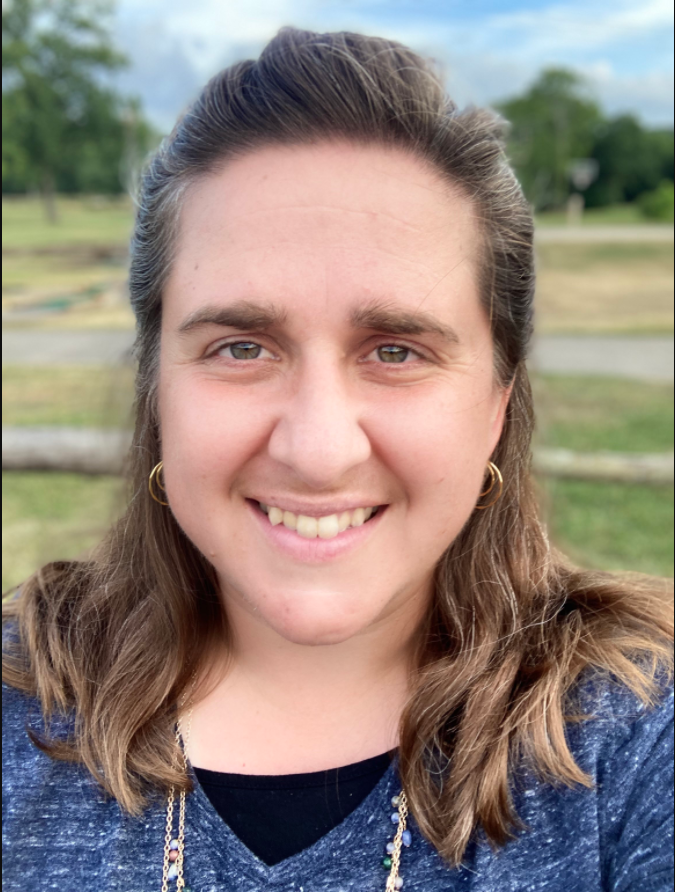
Hi! My name is Rebekah Fruin, and I’m an ATCK. I’ve had the opportunity to live in the US, Russia, Cambodia, and now Ukraine. I’ve also traveled to several other countries, some for weeks or months at a time.
I was born in America, but when I was a teenager, my family moved to Russia as missionaries for three years. For me, the culture shock was quite extensive as it was the first time I’d ever been out of the States. Now, though, compared to other countries I’ve lived in, I just have to laugh at my younger self.
In my late twenties, I moved to Cambodia, where I served as a missionary for five years. The stark differences I noticed between my previous (very Western) and my new (starkly Eastern) cultures made me reevaluate how “close,” in comparison, Slavic culture is to my birth country.
Still, when I moved to Ukraine as a missionary in my early thirties, I once again faced, and still encounter every day, the very nuanced discrepancies even within Western cultures.
Ukraine has become my home, and I love so much about living here: the people, the language, the culture, and so much more. I’m comprised of a bit of each of the cultures that I’ve lived in. Different habits, ways of thinking, memories, and sources of satisfaction interweave in my day-to-day life. And while I love the countries that God has used to make me who I am now, the peculiarities that I’ve adopted from them into my personality are also often a source of either annoyance or amusement to those around me (and, at times, to myself), as I never quite fit completely into any social situation.
What is your biggest TCK struggle, and when did you discover this?
One of the biggest things I struggle with as a TCK is wanting to belong to a group, a team, or a community, but never fully fitting in. Perhaps I want this so strongly because it’s something I feel like I have never really had; every situation I’ve been in has been temporary. And while I know that this is probably something everyone has longed for in some way, I’ve certainly noticed it in my life.
I’ve moved, on average, once every year or year and a half of my life (and that is not counting the frequent travel included in a combined total of eight years of deputation). The longest stretch I’ve been at any one residence was four and a half years in Cambodia. The oldest friendship I have is one from my college days.
All that to say, I sometimes long to be “a part of the gang” or “one of the team,” to feel like I’m part of a group contributing to the betterment of the world, of working tangibly alongside other believers in accomplishing the Great Commission.
Not fitting in is what trips me up every time. Sometimes it’s simply because I didn’t have the same upbringing as other people: watching the same shows, listening to the same music, or reading the same books. When jokes are cracked or cultural references are made, I’m often at a loss because I’ve never encountered them before.
At other times, I struggle to fit in because a variety of cultures have impacted me. I have faced different problems, enjoyed other opportunities, and lacked certain experiences that my peers may have had. All this contributes to my responding or reacting in ways that others find peculiar, which, for them, can be either entertaining or exasperating.
What situations in life are influenced by this struggle?
Every situation that puts me in contact with people is influenced by this struggle of never really fitting in. It plays a role in people’s expectations of what I can or should do, their reactions to what I actually do, and then future engagement as to whether and how I’ll be asked to participate again within certain settings.
Of course, there are those who’ll openly just say how weird something I do is, and sometimes that’s the easiest, because it’s all out in the open, and we both know what the other is thinking.
Many individuals are very accepting and do not get too thrown by my quirks that pop out every now and again. There are others, however, who struggle with it more, and while they try to hide it, I can see it in their faces or hear it in their voices. I often wish I could explain to them why I do something the way I do — my reasoning behind the choices I make — but sometimes I myself don’t immediately know.
What is one way you fight this struggle?
I try not to overthink or analyze other people’s responses or comments toward me (which is another area I greatly struggle in!), because there’s absolutely no way that I can know their true heart intentions. In addition, everything I see or hear is filtered through my worldview, and my assessment of their actions may not even be what they intended.
Furthermore, while it’s hard to remember, it shouldn’t matter what other people think. God made me the way I am, and He’s allowed me to go through the things in life that I have. I’m so grateful for all that I’ve had the opportunity to do, and even if that does make me a little strange to others, I can also see how God is using my “rough edges” for good. The most important thing to me should be what God thinks of me — am I doing what He wants, how He wants it, where, when, and why He wants it?
Regrettably, it’s not always possible to turn off my thinker, so I have to try to filter my thoughts through Philippians 4:8 (KJV):
“Finally, brethren, whatsoever things are true, whatsoever things are honest, whatsoever things are just, whatsoever things are pure, whatsoever things are lovely, whatsoever things are of good report; if there be any virtue, and if there be any praise, think on these things.”
I ask myself, What can I learn from others’ comments or reactions? Is there something helpful I can glean from what they say so that I can become more like who Christ wants me to be? Is there a way I can smooth out a rough edge so that I do not trip someone up further down the road?
God may be using the people around me now to help me improve for situations I will be in later.
At the same time, I hope I am being tender and flexible enough that He is able to use me and my peculiarities to work in the hearts and lives of others around me: to help change them so that they can be more understanding of others in the future due to what they have learned from the time we spent together, when God allowed our two paths to intersect.
How has this struggle also been a strength in your life?
When I was younger, I was shy about sharing why I was different. I didn’t always want others to notice when I acted “strangely” or to know why I did things in ways that were unfamiliar to them. As time has gone by, I’ve been able to change certain habits more permanently to fit in with the status quo.
There are some areas where I’m more flexible, like a chameleon, and I can observe what is going on within a certain group of people and effortlessly blend in. Then, when I move on to another group of people, I’m able to change my color to fit into this new set of cultural norms, and so on.
But then there are areas where I’ve learned to embrace who I am, to recognize areas that I’m “weird” (i.e., socially unexplainable), and to be thankful for it.
I’m glad I still give or receive items with two hands (hats off to Cambodia for that one), or that I return borrowed items with a small thank-you gift (that is due to you, Russia), or that I say hello to strangers on the street or in the store (go, Ukraine!).
Each one of us is unique, and while so many of us want to fit in, to be the same as everyone else, God has a special plan for each one of us. He’s given every individual distinctive talents, characteristic traits, and personalized upbringings. Shouldn’t we be thankful for that and be willing to share it with others?
How does struggling with identity impact your relationship with God?
Struggling with my identity has helped me learn to be thankful that God is patient and all-accepting of me. No matter what traits I may have picked up from the cultures I’ve been in, no matter whether other people are tolerant of who I am or what I do, God loves me unconditionally.
I’m not saying it has always been easy for me to accept this. There are times I’ve come to God with questions, asking why He allowed the things in my life that He has. At other times, I’ve come in tears, struggling with why other people respond to me the way they do. But God loves me, He’s intentionally allowed the past events of my life, He has future plans for me, and He’s always with me.
Ultimately, His opinion of me must be the most important thing in life, the treasure I value more than all else.
Is there anything else you would like to share with other TCKs who struggle with identity or belonging?
This is one of those areas that I think I’ll always struggle with. Although I have tools in my kit to help my mind battle against the overwhelming thoughts when others say or do things that belittle me or how I act, it’s not always easy to respond in the right way. Still, this is something worth battling against — actively rejoicing in every aspect of who God has made me and knowing He has a plan for all He allows in my life.
Thank you so much for sharing with us, Rebekah!
Disclaimer: Opinions or views shared in this interview may not reflect those of the TCKs for Christ team.
 tcksforchrist.com
Join the Conversation