

I scan the last few paragraphs and then read the last sentence. “Na,” I think. “That’s not a good ending. Not enough closure.”
“Something is still missing to round this off nicely,” I comment.
Then I stop and think. “Wait a minute. This is someone’s personal experience. Why can’t it have an open ending?”
“Because that’s not how articles work,” I argue. “Right?”
I close the tab and decide not to answer the question.
Later, I lie in bed and journal. I describe my day, write about a difficult situation at work, and some conflict with a friend. It’ll all work out, I write. In a few short days or weeks, I will look back and know that everything turned out okay. Suddenly, I realize that I have just written a nice concluding sentence.
Quickly, I scan the last few entries, my suspicion solidifying: My need for closure, for a meaning behind everything, can be found page after page.
One journal entry stands out to me. It was the worst, I had written. He just left without saying goodbye. I know rationally that it doesn’t really matter in the grand scheme of things, since I’ll probably never see him again, but I still wanted a goodbye. I need goodbyes. Otherwise, it all seems unfinished.
I reread the last sentences. I need goodbyes … and at the same time, I hate them. How does that make sense? Could it be linked to my need for closure?
I keep reading. Over and over, I find the same phenomenon: Every description of a situation ends on a mature-sounding “this is what I can learn from this,” trying to paint a picture of a meaningful and clear ending.
“But that’s good,” I tell myself, putting my journal aside and switching off the light. “It’s good to see every situation as an opportunity to learn.”
“Except sometimes you can’t,” the other side of me counters, and I know that’s right. There are so, so many situations that I haven’t been able to rationalize into a “learning experience.”
Not every moment in life has a quick and easy “this is why” conclusion. It’s the tension, the unknown, the waiting spaces that are so hard.
In the Waiting Space
I think of Abraham. Left everything. Obeyed God. Sometimes he trusted in big ways, and sometimes he didn’t. But ultimately, he chose to listen to God’s voice, even though he didn’t ever see the big picture. He trusted that it was there. That God knew the big picture. That God knew the ending.
Abraham is not alone. The Bible is full of story after story of people who received a promise of restoration but did not see it in their lifetime. They lived in the waiting spaces. They lived in the tension of not knowing.
Hebrews 11, the so-called “hall-of-faith,” outlines the waiting of many. “These all died in faith, not having received the things promised, but having seen them and greeted them from afar, and having acknowledged that they were strangers and exiles on the earth” (Heb. 11:13 ESV).
I have always loved complex books that had a conclusive “ah, that makes sense” ending.
I used to comfort myself with the thought that God is that kind of author. We may have hundreds of undefined elements flying through our lives, but when we get to the end, we will look back and say the biggest “ahh! Now it makes sense!” ever.
But here’s the thing… we’re not there yet. Right now, we’re still in the undefined in-between place of unresolved storylines and open endings.
It comes back to waiting spaces. And trust.
Trusting that I don’t have to understand because I know that God does. And letting that be enough.
Finding the Conclusive Ending
I stop typing, distracted by incoming messages.
I check my emails, scroll through some messages, and then read through the article I was proofreading a few days earlier. The author had added a sentence that tied perfectly to the beginning. “Ah, yes,” I think. “That’s way better!”
Then I switch tabs to the article I am writing, still trying to think of a nice conclusion.
My need for closure, struggling through waiting spaces, and knowing the God who stands over it all…
I think. Then I type: The thing is, everything in life does make sense … just not now and not to me. But that’s okay because I know it makes sense to my all-knowing God.
There. What a nice, rounded-off article. No loose ends, no unresolved tension.
I grin at the irony and get ready to close the file and go journal about my day. And maybe this time I’ll dare to just describe what happened … without explaining the “this is why” to myself in a conclusive sentence.
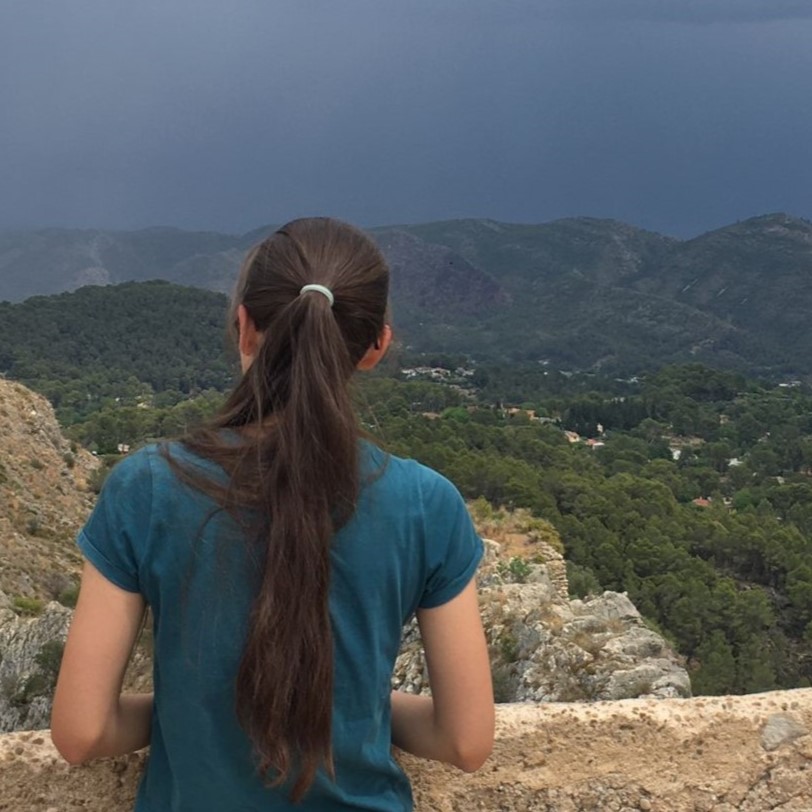
TCKs for Christ: Writer & Email Manager
Sarah Susanna Rhomberg
is an MCK from Europe who is fluent in both English and German. She has cried many tears over the question of home, mother tongue, and identity, and wants to use these experiences to encourage others. Aside from writing, she loves reading, butterflies, and sunsets. Sarah wants to live her life for Christ and writes to glorify Him. You can connect with her at Truth & Hope.
 tcksforchrist.com
Join the Conversation