
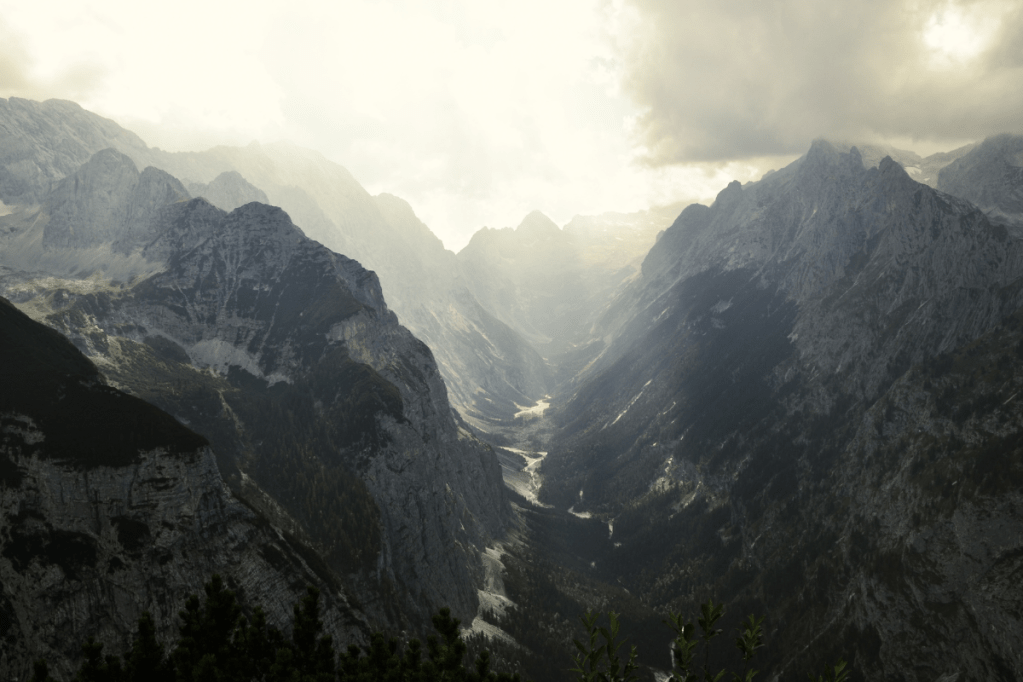
I have grown to find much comfort and solace in the beauty of mountains and nature. Perhaps, I think, there are other souls like me who are in awe of mountains and find happiness in birdsong and laughter. Perhaps there are other kindred spirits who are distressed at the world and know what it means to be redeemed yet broken, saved yet suffering: bent, beaten, and battered.
This article is to those souls who are running, walking, stumbling down the narrow way lined with thorns and roses, briers and olive trees, valleys and mountains. Maybe, in some ways, this article is for me as well. I know that after I have written all I want to write, I will find that I have not written the half of it. Yet I pray that this will bring a little comfort, no matter how small, to your mind and to mine.
Lift Up Your Eyes
“I lift up my eyes to the hills.
From where does my help come?
My help comes from the Lord,
who made heaven and earth.”
Psalm 121:1–2 ESV
I live most of the year in the Cape, in South Africa, surrounded by many mountains. Everywhere I look – from a low playing field, or from a window of a university building – there is a mountain to be seen. Glorious and splendid, those mountains stand: icons of strength, immutability, and constancy.
This year in particular has been battle-filled; a year in which I have tackled hopelessness and dejection. I have looked up to mountains more times than I can count, and I have repeated the words of Psalm 121:1–2 even more times than that. Whenever I am stressed, fearful, or anxious, I recite those blessed words over and over in my mind, “I lift up my eyes to the hills … my help comes from the Lord, who made heaven and earth.” If I am out in the open, or near a window, my head snaps up and my eyes fix on a nearby hill or mountain and I repeat those words until my fearful heart is still.
More recently, I do not say the words, but I lift my eyes nonetheless. Whenever I feel sorrowful, my head snaps up, my eyes find their target … and then my heart wanders. The essence of the psalm is lost to me and all I see is the mountain and its beauty. And I yearn, not for the God of the mountain, nor for the peace of a repeated psalm, but for the mountain itself.
In those moments, the mountains seem to call to me, and if I weren’t bound by the laws of gravity or the constraints of time, I would instantly answer their call. They appear to offer me the things I long for most: peace, joy, serenity, beauty. Somehow, in a warped way, I have made myself believe that if I could take myself up one of their peaks, I could have a closer communion with God and a respite from my earthly troubles and worries, even if only for a while. There’d be blue, endless skies, fresh air, and silence. Not even the smallest chirp of a cricket would break the deep-reaching serenity. Surely, this is true freedom?
But, now, I have come to realise…
The Problem with Mountaintops
“Truly in vain is salvation hoped for from the hills, and from the multitude of mountains: truly in the Lord our God is the salvation of Israel."
Jeremiah 3:23 KJV
The problem with mountaintop experiences is that they don’t last.
I have hiked up only two mountains in the Cape – Lion’s Head and Devil’s Peak – peculiar names for mountains, I know. Nevertheless, I had fun on my hikes … even my hike up to Devil’s Peak! During one of the hikes, my friends stopped to sing “How Great is Our God,” and my heart soared. God is truly great! my heart cried. Of course, it was easy to rejoice in the greatness of God, there on a mountaintop.
Granted, the hike up both of the mountains, especially Devil’s Peak, was strenuous and tiring, but by the time I reached the top of the mountains, I was exhilarated. I felt the joy of being “on top of the world.” Everything below – the buildings, cars, and people – felt so small and harmless, so unlike what they were when I was in the valley many hours before. Clouds fluttered close by, below and above me. Even the sun hurried to set in a region below, casting beautiful, warm colours over the Atlantic (or was it the Indian?) ocean. As I gazed out at the world below from my exalted state, with friends sitting close by me, the overruling sentiment in my heart was that the God of the mountains was a great and awesome God.
But my mountaintop experience did not last forever, and I soon had to make my way down. The buildings, cars, and people grew bigger and bigger. The clouds lifted up and away, and the setting sun was tucked behind the looming concrete jungle. I would, if I could, have stayed on top as long as possible, but life (most of it anyway) must be lived in the…
Troughs of the Valleys
“You make springs gush forth in the valleys; they flow between the hills.”
Psalm 104:10 ESV
“I never knew before … that the valley is such a beautiful place and so full of song.”
From Hind’s Feet in High Places by Hannah Hurnard¹
Mountaintops can be lonely places.
Most of life is lived in valleys and troughs. And even if a way must be made to the top of the mountain of life, it isn’t without its hardships and trials. If God only resided on mountaintops, then we would be destined to eternal misery. But we praise His name because He is our Shepherd who also leads us through troughs of valleys (Ps. 23:4). He is also the One who makes the rugged paths of our lives smooth, who levels the rough grounds of our despair, who lifts the valleys of our distress to become places of contentment and enjoyment (Isa. 40:4).
The river of grace, with its branching rivulets, does not run up the mountains, but flows down, crashing from high cliffs, and plunging from rocky ledges, into refreshing pools in the valley below.
“Come, oh come! let us away—
Lower, lower every day,
Oh, what joy it is to race
Down to find the lowest place.
This the dearest law we know—
‘It is happy to go low.’
Sweetest urge and sweetest will,
‘Let us go down lower still.’
“Hear the summons night and day,
Calling us to come away,
From the heights we leap and flow
To the valleys down below.
Always answering to the call,
To the lowest place of all.
Sweet urge and sweetest pain,
To go low and rise again.”
“The Water Song,” from Hind’s Feet on High Places by Hannah Hurnard¹
In the valley, orchards can emerge out of dry lands, and fruitful fields can be cultivated from deserts (Isa. 32:15). Here, saved yet suffering souls grow up beside rivers of grace to become strong trees with deep roots and firm branches (Ps. 1). Here, the Gardener of our soul ploughs His fruit trees, pruning the edges, removing the weeds, and tending branches, so that they can bear fruit to His glory. Here, in the valley, God sows seeds for His harvest after He has broken up fallow ground. After all, He, as the Sovereign God, is…
The God of the Mountains and Valleys
“...the Syrians have said, The Lord is God of the hills, but he is not God of the valleys.”
1 Kings 20:28 KJV
The Syrian in me is restless and screams.
Does he do that to you too? Has he told you that God can not help you, poor and broken soul that you are, in your valleys of despair? Does he tell you to look forward to the mountaintop experiences of life as your only encounter with the Lord? He does that to me sometimes. He tells me that God is still on the mountain, that He hasn’t come down, and that He never would come down to the valley for the likes of a broken soul like me.
“Take your rest now,” says the Syrian. “Wait till you have scaled the mountains of breakthroughs and blessings before you find peace, joy, and happiness. After all, to scale the mountains, you must be this prayerful and this spirit-filled.”
But, I have heard it said, “Life is not mountaintops, it is the walking in-between.” So, if God is not the Lord of the valleys in my life and in yours, then we are doomed to live in despair since much of our lives are lived in those places between the mountaintops of breakthroughs and blessings.
God is Lord over mountains and over valleys. He is God of the high places and the in-betweens. Our Godwill shut down the voice of the Syrian in us, for He refuses to be confined to mountaintops.
“And there came a man of God, and spake unto the king of Israel, and said, Thus saith the Lord, Because the Syrians have said, The Lord is God of the hills, but he is not God of the valleys, therefore will I deliver all this great multitude into thine hand, and ye shall know that I am the Lord.”
1 Kings 20:28 KJV
He has promised to be faithful as we walk the in-betweens of life (Isa. 43:2). He makes prayer, the heart cry of thirsty souls, and fellowship, refreshing water to thirsty spirits, readily available in the valley. He is my God and yours, if we would hold onto Him (Heb. 3:14–15; Jhn. 15:4–9). And I trust that, by His grace, we will.
“We are afflicted in every way, but not crushed; perplexed, but not driven to despair; persecuted, but not forsaken; struck down, but not destroyed; always carrying in the body the death of Jesus, so that the life of Jesus may also be manifested in our bodies.”
2 Corinthians 4:8–10 ESV, emphasis added
“For we do not want you to be unaware, brothers, of the affliction we experienced in Asia. For we were so utterly burdened beyond our strength that we despaired of life itself. Indeed, we felt that we had received the sentence of death. But that was to make us rely not on ourselves but on God who raises the dead.”
2 Corinthians 1:8–9 ESV, emphasis added
“Consequently, he is able to save to the uttermost those who draw near to God through him, since he always lives to make intercession for them.”
Hebrews 7:25 ESV, emphasis added
Reference:
1Hurnard, Hannah. 1979. Hinds Feet on High Places. Tyndale Momentum.
TCKs for Christ: Writer
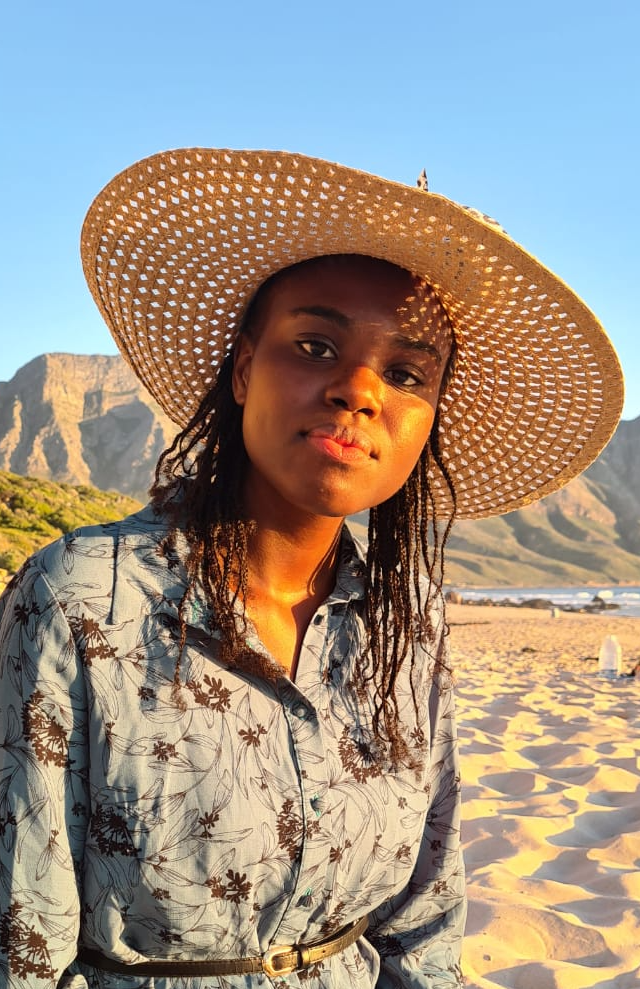
Joy Adewumi
is an avid dreamer, writer, and unapologetic Christian. As her name states, her one purpose in life is to spread joy wherever it is needed. Formerly a PK, she has lived in South Africa as a TCK for most of her life. She enjoys reading, writing, and playing the piano. Connect with her on Instagram @DJoyGene

 tcksforchrist.com
Join the Conversation