
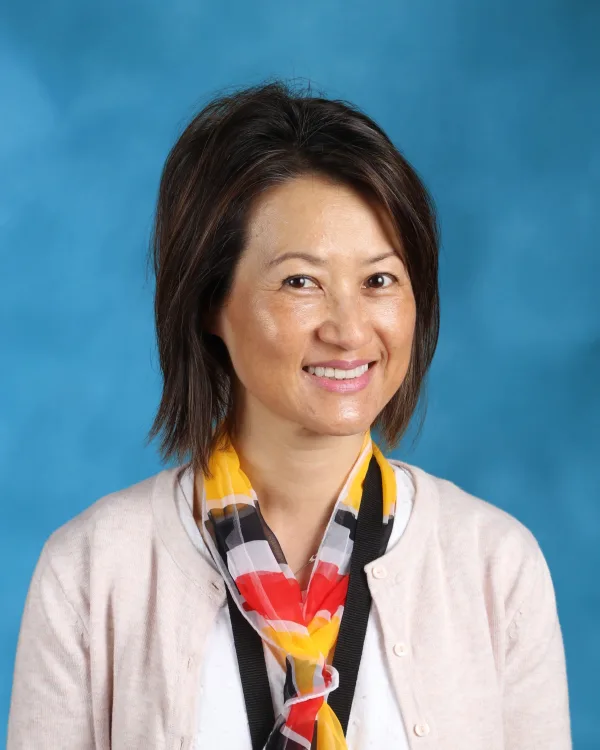
Today we have FB with us! Welcome, FB!
Can you tell us a bit about yourself and the different cultures you are part of?
I was born in Seoul, South Korea, then moved to the US with my family when I was 7 years old. I grew up near the D.C. area, in a mid-Atlantic state, which has a different vibe and culture than where I live now in Georgia, the southern part of the country. Being a writer (writers tend to be observers) and a TCK, I am attuned to not only cultural differences between countries but also differences in norms between states and towns.
What is the strangest thing you have done as a TCK?
Playing the tooth fairy by putting coins under my daughter’s pillow in exchange for her tooth. Not having grown up with this tradition, I didn’t have my own experience to draw on so I’ve had to fumble through odd-to-me customs.
What is the hardest thing about being a TCK?
I don’t feel a belonging to one culture or the other. When people ask me which country I’m from, it reminds me that I am different. When I had a chance to go to Korea for a visit, a shop owner commented about me (without addressing me) to the local person I was traveling with and said, “She’s not from around here, is she?”
How has being a TCK helped you when interacting with people?
Most people know that when gathering with strangers, a person almost always seeks someone familiar or who looks like them. What most people don’t know is that looking foreign or different is generally not an invitation for conversation. So it’s extremely rare in a new setting with strangers that someone initiates a conversation with me. Because of my experience, I often notice people different from me and those who appear out of place.
In making an effort to seek out different others, I’ve met interesting and salt-of-the-earth people. One particular person I met in college, probably because he, too, was an other-culture person, was Naji. He was the first person from Lebanon I ever met. I tasted tabbouleh for the first time at his house. As my friend, he was excited to introduce me to his favorite dish. I feel the same hopeful anticipation when I share my favorite Korean dishes with others who have never experienced them.
What characteristic of God have you learned most about in your life as a TCK?
That in all places, people have more in common than not. The source of that commonality comes from God; we are all made in the image of God.
You are an author of bilingual (Korean-English) children’s books. Can you tell us a little more about that?
I had to learn Korean fast because although our family had lived in the US for nearly 30 years, my mom wanted to go back and live in Korea after my dad passed away.
My mom moved to Korea and subsequently became very sick. With the news of her illness and not knowing how long she would live, I saw into my future – flying to Korea, conferring with doctors about my mom’s condition, and possibly flying her back home.
Yet, how could I do that when I had forgotten the Korean language? When we moved to the US, I was seven years old. Korean seemed unnecessary and uncool, so I abandoned it like rotten leftovers.
As an adult, I found myself in a Korean school with eight-year-old classmates. Their young brains sucked up the language as though drinking from a thick boba straw while my brain seemed to sip it at the speed of a clogged plastic coffee stirrer.
When I received homework assignments to read Korean traditional folktales, these stories greatly supplemented the textbooks in my language learning. Learning a foreign language, one story at a time, seemed approachable. And so I plugged along for many years learning and relearning the language. During this time, my mom’s condition remained stable.
I translated the tales into English to show them to my seven-year-old daughter, Rachel, an avid reader. She knew Cinderella, Little Red Riding Hood, and The Three Little Pigs but consumed the Korean-turned-English stories with a stronger appetite than American stories and asked for more and more. I secretly liked the subtle moral message that came with each story and the insight into a rich culture we never knew existed.
I read my translations to K-3rd graders at my daughter’s school and received equally good reviews. Their enthusiasm energized me to adapt the tales, making them more accessible to a younger, Western audience. That’s how I got into writing for children. I guess it was a way of sharing my rediscovered language and culture with my kids and with others.
I went to Korea about six years into re-learning the language and used every bit of my acquired native tongue skills to settle my mom’s household there and bring her “home.” I realize now that my mom, too, was a TCK in a way, and by going back to her roots, she was seeking a place to feel at home. May her soul rest in peace.
Would you like to end with a prayer for our readers?
Lord God, You made us for heaven. There, with You, we will always belong and always feel at home. Thank You for reminders that our time in this world will pass. Thank You for seeding us with compassion through our joys and sorrows and gifting us with a desire to reach out to others with love.
Thank you so much for sharing with us, FB!
Disclaimer: Opinions or views shared in this interview may not reflect those of the TCKs for Christ team.
 tcksforchrist.com
Join the Conversation