
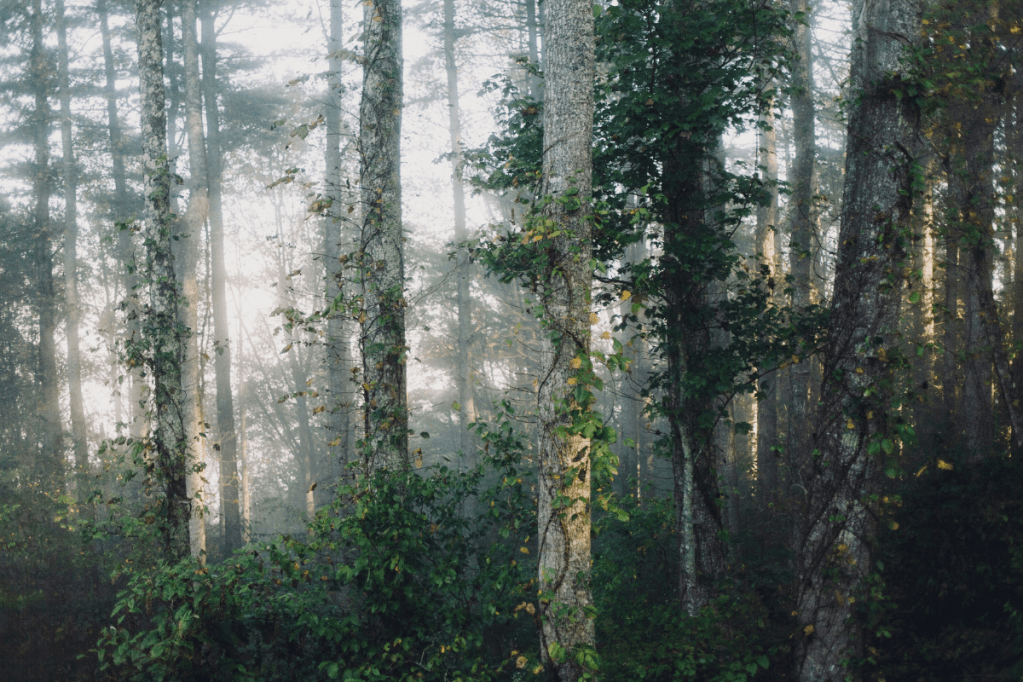
I have never really looked at a tree as something from which I can learn life lessons. However, in the last couple of weeks, I have been reading a lot about trees and the ways they grow, communicate, and interact; and I was surprised to find examples and lessons that are very applicable to life — especially life as a TCK in transition.
That’s what I am, a TCK in transition. (When are we not in transition?) I recently moved to a new city to begin attending a new university, and the trees I’ve encountered in my studies have taught me more than just science. They’ve taught me about life.
1. Each of a tree’s rings is a year’s worth of growth — and not every ring is the same size. Hard years produce a smaller, less healthy ring than the good years.
Hard times are a reality. Sometimes we don’t thrive, and that’s okay. A tree wouldn’t be a tree if it didn’t have all its rings — from both the good and the bad years. You wouldn’t be you without all your experiences — the good times and the hard times work together to form who you are. Don’t try to block out or discredit the bad times; they are just as much a part of you as the good.
I think of the story of Joseph in Genesis 37–45. I’m sure we can all agree that being sold into slavery by your brothers is not a good thing. However, if that chapter of his life had not happened, neither would the rest of his story — becoming a powerful leader who was second only to the Pharaoh.
God often uses times of suffering or struggle to build us up and make us stronger, leading us to and preparing us for what He has planned for us. Without those hard times, we wouldn’t have gotten to where we are now.
2. Trees rely on one another for support in various ways. If there is a threat, such as a disease or a pest, they warn the trees around them so they can prepare their defenses adequately. Trees need one another to be the healthiest they can be.
Community is a blessing. We need people in our lives to support us and to find balance. To pour into us and to help us be healthy. People who can be involved in our lives and warn us of potential dangers coming our way, to show us things in our lives we don’t see ourselves.
Sometimes it seems like those people don’t exist. Trust me, I’ve been there many times. Keep looking. Keep trusting. Our Father knows what (and who!) we need before we even say a word. He is our faithful provider (see Matthew 6:8).
3. Trees can drink up too much water and bust at the seams, causing irreversible damage to their trunks and leaving painful holes and scars.
Water is good for trees, we all agree. But even good things can turn into harmful things when they are taken in too large doses. In humans, I would parallel this damage to burnout.
Taking on too much (even if they are good things!) will cause us to bust at the seams. Growing up as an MK, stepping into missions as an adult, and now jumping into university, I can’t tell you how many times I’ve heard the caution, “Be careful, you may need to not do so much. Slow down before you are forced to slow down.”
It is possible to have too much of even the good things in life if they end up keeping us from doing the right things.
4. After a disturbance or change in environment, such as a storm, a tree must restabilize itself. They do this by forming little tears in the areas they need to strengthen, and little by little, as they heal, they become stronger. But it can be years and years before they are truly stable.
It is okay to take time. After a big change or shift, take the time you need to recover and get used to where you are and your new environment. Rather than just carrying on with life as usual, maybe recognize that this new life will need to be different from your old one. What are some new habits you will need to institute? What are some old habits you will need to cut out?
Just like farmers prune trees to make them grow better, stronger, or in the right direction, maybe you need to cut off some branches or create little tears in your life to help yourself grow better and in the direction you need. Whether these little tears involve removing specific habits, activities, or even people — prayerfully examine yourself. It will be painful, but through the little tears come big healing that results in a stronger tree.
5. Most trees do not send their roots down deep, just shallow and wide.
This is a difficult one for me to unpack. My roots are widespread. Very widespread. And I feel the tension of this when putting down new roots. I feel the pull of the roots I’ve already grown that are so far away, and they ask, “How many more can you grow?”
A tree only has so much energy and can only make so many roots, and yet roots are essential for the tree’s survival.
So often these days, I feel like I am trying to transplant a tree that already has well-developed roots into a hole that is far too small to fit those roots. But you can’t dig the hole bigger because there are other trees planted around it, trees that have been there for years and already have their roots and system of communication established.
These other trees are so helpful and kind — they make room for my roots and share their space with me — but it is impossible to ignore the fact that this is their space, they were here first, and my roots are at the mercy of theirs.
Sometimes the Enemy (I don’t know what the tree equivalent of Satan would be. Pine beetles? Dutch elm disease? I don’t know; it doesn’t matter…) uses this to get to me. He says, “Acacia, all these people were just fine before you got here, their lives were going great, they have an entire life without you. If you disappeared, they would just go back to normal, like nothing ever happened. Why are you even here? There’s no point in trying to put down your own roots; they don’t matter. This will never be your forest.”
Those are the hard days. But the Arborist who planted me here didn’t plant me and leave me alone to be eaten by the beetles — He is here protecting me, nurturing me, and encouraging my roots to grow with the best fertilizer — His presence.
The Tree I Want To Be
Being in places that so obviously aren’t yet my own with people who aren’t yet mine makes the hope of heaven so much stronger and sweeter. But I am still here on earth, and heaven is still a future hope, not a present reality. So, what will I do with that? What will you do with that?
God has planted each of us in our specific places for a reason and has us surrounded by specific people with a purpose in mind. Maybe you don’t know exactly what that purpose is yet (I don’t!), but wait for Him and continue to put your trust in the Lord, allowing Him to send out your roots where He wants them to grow.
A verse God has given me in this season is Jeremiah 17:7–8;
“Blessed is the man who trusts in the LORD, whose trust is the LORD. He is like a tree planted by the water, that sends out its roots by the stream, and does not fear when the heat comes, for its leaves remain green, and is not anxious in the year of drought, for it does not cease to bear fruit” (ESV).
This is the tree I want to be. I want to be a tree planted by the water who isn’t shaken by what happens around her because her trust is in the Lord.
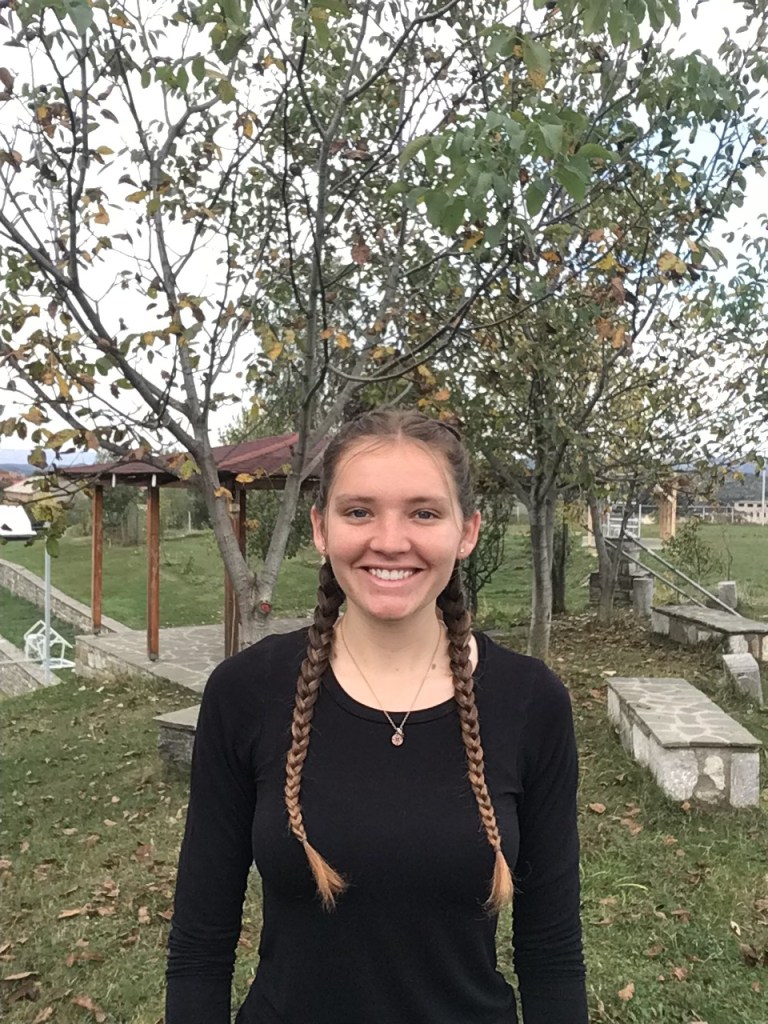
Guest Writer
Acacia Britton
is a TCK/MK who grew up in Uganda, East Africa, for most of her life. Though her family moved back to the United States in 2019, she began her own missionary journey once she graduated high school and moved to Albania, where she served for two years with an organization called Torchbearers International. She just moved back to the States and now attends Colorado State University.

 tcksforchrist.com
Join the Conversation