

I cried silently as I lay on the picnic mat next to my two best friends. The Southeast Asian heat prickled our skin as we lounged surrounded by bright green fields. In the distance, we could just see the Mekong River. The day felt idyllic, and yet I was so sad.
I was a teenager living in Laos, and it was a pivotal time of my life. In many ways, I was blossoming, not least because of the love and support of strong friendships. It had been such a treat for shy, socially awkward me to have people right there who enjoyed me for who I was.
Now, though, my best friends were talking about returning to America. “I don’t know how well I’ll be able to do long-distance,” one of them was admitting frankly. “I’ll get busy with college classes, and I have friends there already. Keeping in touch might get hard.”
I turned over as if I were sleeping, stretched out in the sun. I hid my face. I didn’t want them to know I was crying. I’d trained myself over the years not to cry publicly — or at least to cry imperceptibly if tears could not be helped. I did not want to show weakness. I had to be strong.
I knew this was normal life — the comings and goings, hellos and goodbyes. I didn’t want to burden others with my emotions. But was it really going to be like that — just leaving and forgetting each other?
Confronted
A couple of days later, I retreated to our balcony and squished myself into a corner with my journal. I wanted to wallow alone. Suddenly, I heard the clank-clank-clank of footsteps coming up the winding metal staircase to the balcony. My two friends appeared. “What’s going on, Lynette? We noticed that you’ve been upset lately. Talk to us!”
At first, I didn’t want to. I was annoyed that they wanted me to talk. I could handle this alone; I always handled everything alone. However, with their gentle insistence, eventually my pain bubbled to the surface. I admitted my sadness and fear of losing their friendship when we parted ways.
They surrounded me with hugs and understanding, promising to do their very best to stay in touch. They reassured me of how much I meant to them, and that they weren’t simply going to throw our friendship away. They were still there for me; I didn’t need to go through this pain alone.
Allow Yourself to Be Vulnerable
If you’re anything like me, perhaps you’ve learned to minimize your own needs or squash your emotions because you didn’t want to burden others. Perhaps you’ve seen other people carrying heavy loads, dealing with crises, or generally being wrapped up in important work, so you didn’t want to add to their troubles with your own. Or perhaps you’ve felt fear or embarrassment in admitting weakness because you were used to being perceived as some kind of leader or example.
But what if it’s okay to be vulnerable? What if it’s okay to ask for help? What if it’s okay to be a “burden”? You might just discover support, love, and a community willing to carry you through the tough times, as I did.
Scripture invites us, “Cast all your anxiety on [God] because He cares for you” (1 Peter 5:7 NIV).
But other believers are also described as the body of Christ — a body whose parts “should have equal concern for each other” so that “if one part suffers, every part suffers with it” (1 Cor 12:25–26 NIV).
When we ask safe people for help and admit our needs and struggles, we can allow God to care for us tangibly and practically through His body, the church.
Paul writes, “Carry each other’s burdens, and in this way, you will fulfill the law of Christ” (Gal. 6:2 NIV). Perhaps you’re used to being the one to help others. But when you allow others to carry your burdens, you also give them the chance to be conduits of Christ’s love to you.
Friend, you can let yourself be a “burden.” You don’t have to do life alone.
TCKs for Christ: Staff Writer
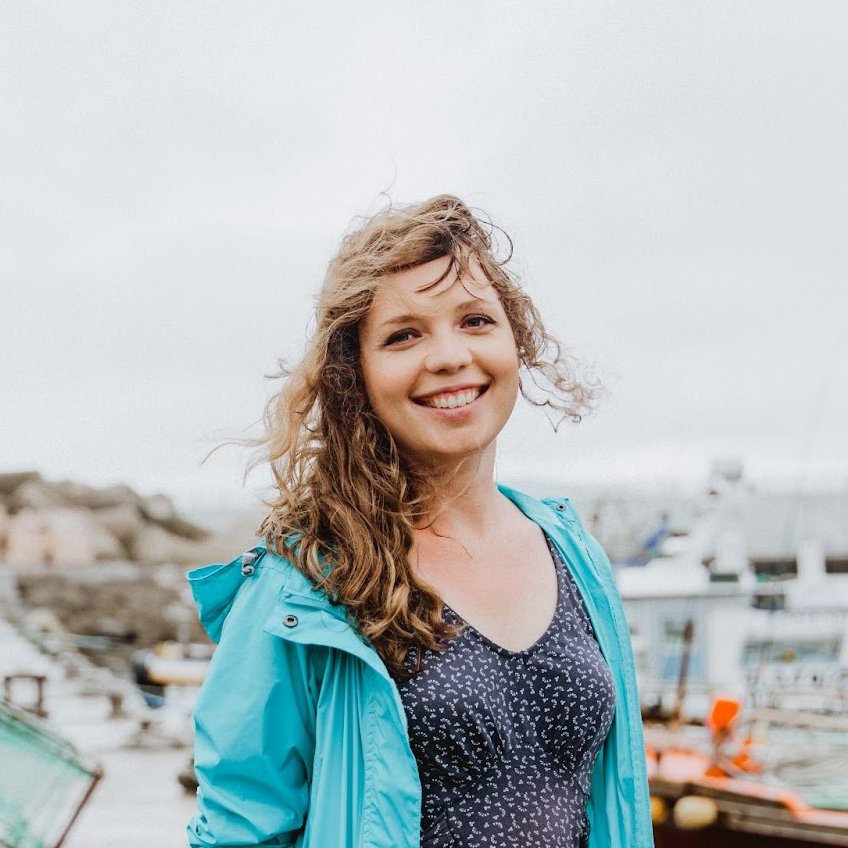
Lynette Allcock Yoon
is a writer, teacher, and former radio host. She grew up in three countries and now lives in South Korea with her husband. She writes about life abroad, faith, and relationships from an expat, TCK perspective. Lynette loves helping fellow wanderers and sojourners to feel seen, encouraging them to overcome the challenges and find the beauty in cross-cultural living. Outside of work, she enjoys musical theatre and long walks with good friends.
You can find her on Instagram @wordsforwanderers or at lynetteallcock.com.


 tcksforchrist.com
Leave a reply to TCK Voices: Appreciate Where You Are Cancel reply