

I was 25 years old. Halfway to 50. A quarter of a century.
I could picture people’s responses if I were to express my apprehension aloud: a knowing smile, a wave of dismissal, and the words, “Twenty-five is so young.”
Still, I felt my life slipping through my fingers like sand. If my next five years were to speed by as quickly as my previous five years had, the next thing I knew, I’d turn around and be 30.
I felt behind. Others my age had graduated from college and were pursuing their five-year plans. Their lives appeared to be organized in neat, predictable packages. I, meanwhile, was floundering to fit in.
What had I done to show for my 25 years on earth?
Again, I could predict the reassuring responses. “You’ve experienced life in another country.” “You’ve learned a second language.”
I knew both statements to be true. And honestly, I was deeply grateful for my third-culture experiences. But I also knew that well-meant words of validation wouldn’t help. So I kept my fears and grief between myself and God.
“God, I feel lost,” was my desperate plea. “Confused. Set adrift on an open ocean, aimless.”
Is this how I would always feel? Drifting through life — riding the swells when the storms crash, sitting stagnant on the days of calm? I dreaded the day that I would look back and wonder what I had done with my life.
Exactly as I was wondering right now.
Where did my teen years go? My early twenties? What’s more, how, oh how, could I make my late twenties count for something more?
—
An audio reading of Philippians set to hip-hop music filled the car.
“For to me, to live is Christ and to die is gain … I am torn between the two: I desire to depart and be with Christ, which is better by far; but it is more necessary for you that I remain in the body” (Phil. 1:21, 23–24 NIV).
I watched the Arkansas countryside rush by as the apostle Paul’s words hit me in a way they never had before.
“What is more, I consider everything a loss because of the surpassing worth of knowing Christ Jesus my Lord … Forgetting what is behind and straining toward what is ahead, I press on toward the goal to win the prize for which God has called me heavenward in Christ Jesus” (Phil. 3:8, 14 NIV).
Under the hum of tires speeding down the highway, I heard a silent whisper. To cling too tightly to your youth is to love this world.
Wait … what?
Paul longed to go and be with Christ. Why should I dread seeing my life slip by when that only means getting closer to my heavenly home? Paul forgot the past to press on toward the heavenly prize. Why should I cling with regret to the years behind me when I have an infinitely better future to look forward to?
The apostle John’s words sprang to mind. “Do not love the world or the things in the world …” (1 John 2:15 NKJV).
Cautiously, I loosened my grip on what I hadn’t even realized I’d been frantically clinging to.
“Okay, God. I’m giving my youth to You,” I prayed silently. “Please take good care of it for me.”
—
I was 25. So what?
Grieving lost opportunities had its time and place. Assessing how far I’d come and adjusting my goals accordingly was wise and good. But obsessing over what I had or hadn’t accomplished by 25 was entirely the wrong focus.
It put too much weight on this temporary, fleeting life in this imperfect world.
When we live with the view of eternity, it stops mattering so much when life doesn’t go the way we hoped or planned. Our hope isn’t pinned to our time on earth.
And here’s something else: when we let go of our expectations in life, we’re freed up to more fully appreciate the good things that God brings our way.
—
I was 26.
Turns out, it’s one thing to learn a lesson in your head, and quite another to take it to heart.
I had transitioned between countries and moved back in with my parents. I felt stuck and frustrated. If anything, I was moving backward. Wasn’t I?
It seemed that the harder I tried to make goals, the more immovable the obstacles in my path became. I felt aimless, incapable, a failure. Forever behind.
A foggy depression settled in.
I stared down my upcoming year with apprehension. Would 27 roll around, only for me to find I had learned nothing, gotten nowhere? Was I simply running myself to exhaustion on a treadmill that was leaving me in the same place I started?
—
I climbed from the floating dock on a remote island shore up to a tin-shod church building surrounded by dense temperate rainforest. Inside, the church smelled of wood and cool summer rain. Young people filled the seats, eager to worship and learn about God together.
Philippians 3 took center stage in the day’s theme.
“But whatever were gains to me I now consider loss for the sake of Christ. What is more, I consider everything a loss because of the surpassing worth of knowing Christ Jesus my Lord, for whose sake I have lost all things. I consider them garbage, that I may gain Christ.” Philippians 3:7–8 NIV
“What things was Paul referring to that he once thought were valuable but now considers worthless compared to knowing Christ?” my small group discussion leader asked in Spanish. “And what things in our lives might this apply to?”
“My career,” someone volunteered.
“Education. Social status.”
“Skills I’m good at. Goals I’ve accomplished.”
As I listened, all I could think of was what I hadn’t accomplished. The memory of listening to Philippians in the car a year and a continent away swelled in my chest.
I chimed in on the discussion. “Missed opportunities. Things I haven’t done. Sometimes, it’s not only the things we have that we need to let go of, but also the things we don’t have.”
Rain pattered outside the open windows. Conversation from the other groups hummed.
Our discussion leader looked at me thoughtfully. “Yes,” he said softly.
Several hours later, I clung to a rope for balance on the tiny fishing boat transporting me across the choppy gray sea. The church on the beach slowly slipped from view. My coat was slick from a sudden downpour, and the fishing boat lurched under my feet. In my soul, a soft peace had begun to permeate.
—
I was 27.
I was beginning to believe that this lesson was a lifelong journey. At the same time, I was beginning to more fully grasp something I previously hadn’t been able to.
Trust.
I could work hard and do my best with what I’d been given, I realized, while still trusting God with the outcome.
—
I am now 28.
I read these musings I have written over the course of several years, and I smile, the expression both soft and bittersweet.
Are my twenties rapidly drawing to a close? Yes. Am I okay with that? Also yes.
Do I have everything figured out? Absolutely not. Most of the time, I still feel like I’m just along for the ride as I hop from place to place, carrying my home in my backpack and my work on my laptop. But I’m learning to enjoy the ride and trust God in the process.
A few months ago, I was walking my sister’s dog in the heat of a Texas summer day and reminding myself I needed to get busy with some serious decision-making. “I really should look at plane tickets and make a decision soon,” I told myself. “My plans as of now only take me to” — I quickly calculated in my head — “two weeks from now.”
I choked. I didn’t yet know where I would go or what I would be doing two weeks from now. And somehow … I wasn’t stressed about that. Or was I? I studied the roofs of the three-story buildings across the street as I analyzed this deep question.
My dog-nephew tugged on his leash, ready to move on from my uncalled-for standstill. No, I felt certain that I really wasn’t stressed. I chuckled. My 25-year-old self certainly would have been.
I wouldn’t necessarily recommend this nomadic, unrooted lifestyle I’ve adopted in my 20s (although there is plenty to love about it). But I can say that through it, God has taught me a bit about trusting Him in the face of the unknown.
I am almost 29. I have never had a “real” job. I have never been in a relationship. I have never done a lot of things many “normal” people have by this age. Sure, I have done some other pretty cool things, but — life isn’t about what I have or haven’t done, anyway.
Life isn’t measured by what I have or haven’t accomplished by 30. (Side note to my younger self: 30, now just around the corner, doesn’t seem all that old or scary after all.)
I need not fret when my journey doesn’t run parallel to the people around me. I need only live responsibly the journey God has set me on.
Even if I am “behind,” it’s okay. Maybe I’ve just taken the scenic route.
In the end, I have to trust that my life, as unconventional as it often feels, is in my loving and fully competent heavenly Father’s hands. That is more than enough.
“My times are in Your hand …” (Ps. 31:15 NKJV)
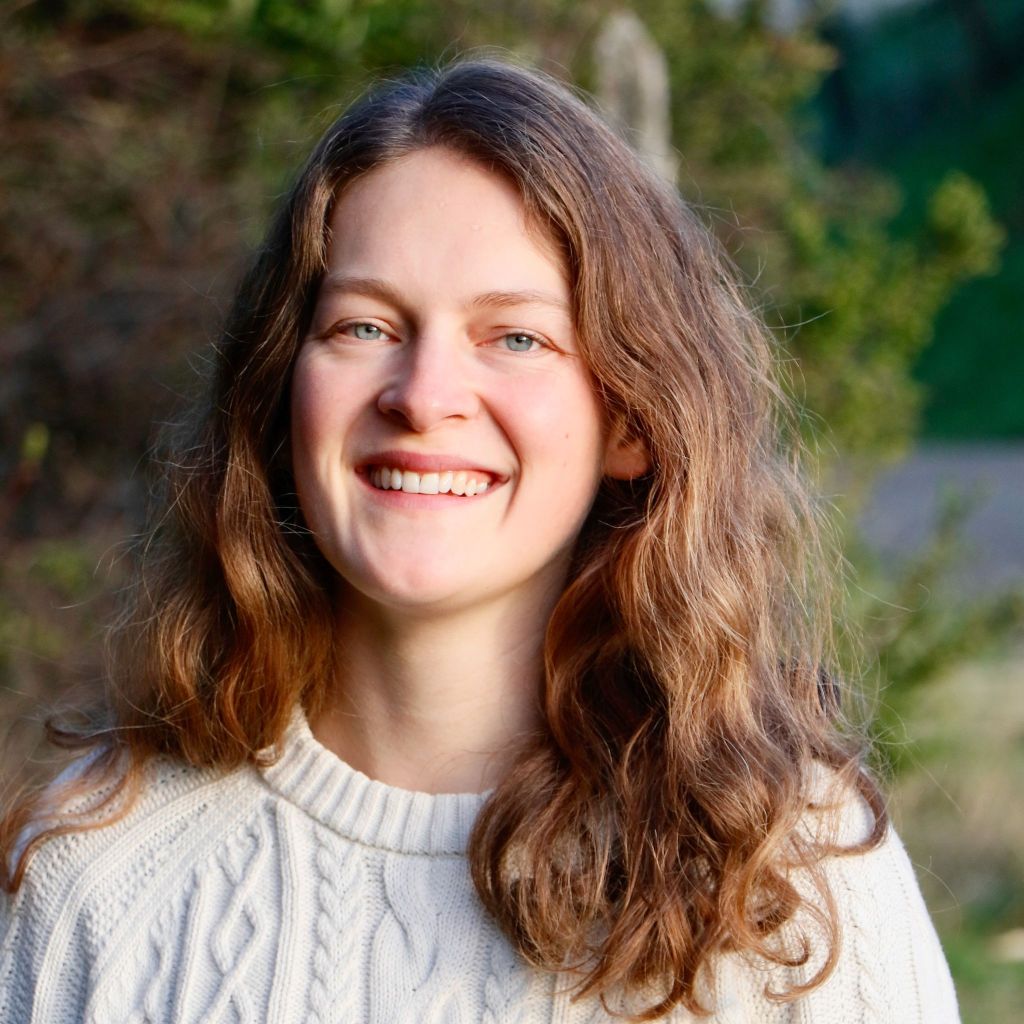
TCKs for Christ: Editor-in-Chief
Bridget Marshall
is an editor, writer, and English teacher who grew up between the USA and Chile. One consequence of hopping between hemispheres is that she has now lived 12 more summers than she has winters. She loves Jesus and is fond of good stories, yerba mate, and adventures in nature.


Join the Conversation